
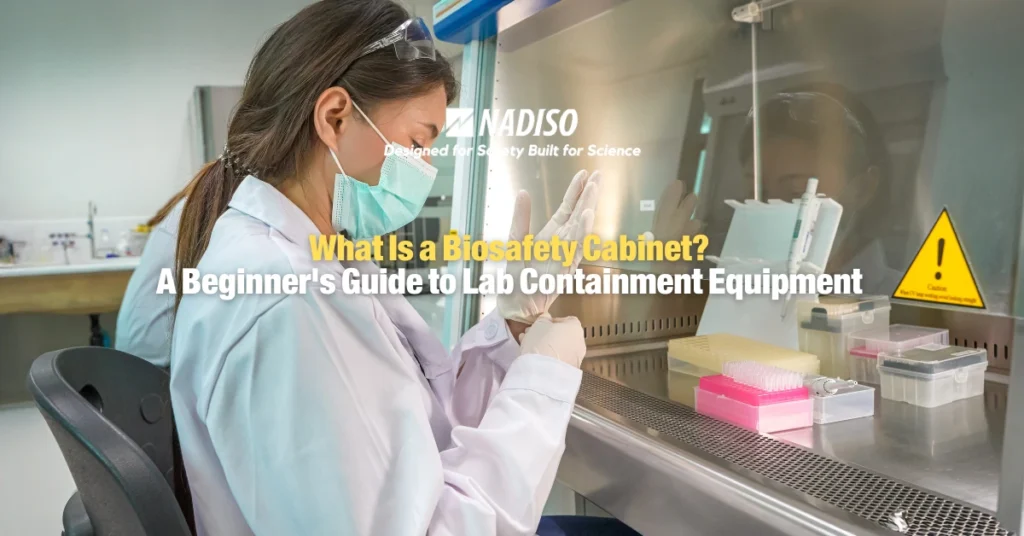
One of the most important equipment in modern biological laboratories is a biosafety cabinet. A biosafety cabinet offers a controlled workspace that shields laboratory staff, biological samples, and the surrounding area from potentially infectious materials, whether it is employed in clinical diagnostics, microbiology, biotechnology, or pharmaceutical research.
Not like a Fume Hood (you can read what is fume hood here), which removes hazardous chemical vapors; a biosafety cabinet is specifically designed for safely containing biological agents through controlled airflow and HEPA filtrations. Investing the proper lab equipment, especially a certified biosafety cabinet, has become essential for laboratory safety, regulatory compliance, and trustworthy research results as biological research continues to grow.
If you wonder what Biosafety Cabinet is, it’s an equipment that helps lab workers to prevent contamination from biological materials. Using High-Efficiency Particulate Air (HEPA) filters, a biosafety cabinet continuously filters incoming and outgoing air to remove airborne particles and microorganisms. HEPA filters capture at least 99.97% of particles measuring 0.3 micrometers, creating a clean and controlled work environment.
Understanding the Different Types of Biosafety Cabinets
Biosafety Cabinet Class I
Class I cabinets do not protect the biological sample itself, but they do safeguard the environment and lab workers.
They are frequently employed for:
- Work in general microbiology
- Handling biological waste
- Low-risk laboratory techniques
Biosafety Cabinet Class II
The most popular type of biosafety cabinet in labs worldwide is the Class II model.
It offers concurrent defense for:
- Personnel
- Biological goods
- A laboratory setting
This kind of lab apparatus is appropriate for:
- Culture of cells
- Clinical labs
- Pharmaceutical studies
- Laboratories for biotechnology
- Research facilities at universities
Class III Biosafety Cabinet
Class III cabinets provide the highest level of biological containment.
These completely enclosed systems are used for handling highly infectious pathogens and are commonly installed in Biosafety Level 4 (BSL-4) laboratories.
Best Practices When Using a Biosafety Cabinet
Without the right operating methods, even the greatest biosafety cabinet cannot offer sufficient protection.
Permit Airflow to Stabilize:
A few minutes before you start working, turn on the cabinet.
Maintain Clear Air Grilles:
Airflow is disrupted and containment is decreased when front or rear air grilles are blocked.
Work Slowly:
Quick arm motions may obstruct the biosafety cabinet’s ventilation.
Before and after use, disinfect:
Before and after every procedure, use certified disinfectants to clean work surfaces.
Plan Your Annual Certification:
The biosafety cabinet continues to function in accordance with manufacturer specifications and international safety standards thanks to routine inspection and certification.
Choosing the Right Biosafety Cabinet
Selecting the appropriate biosafety cabinet depends on the type of laboratory work being performed.
Before investing in this essential lab equipment, laboratories should evaluate:
- Types of biological agents handled
- Required Biosafety Level (BSL)
- Laboratory layout
- Ventilation requirements
- Certification standards
- Future maintenance and servicing
Working with an experienced laboratory equipment provider ensures that the biosafety cabinet is properly selected, installed, tested, and maintained throughout its operational life.
A biosafety cabinet is a vital safety device that safeguards laboratory workers, biological samples, and the environment. It is much more than just normal lab equipment. It allows labs to conduct biological research safely while lowering the danger of contamination and exposure by combining sophisticated HEPA filtration with regulated airflow.
Investing in a certified biosafety cabinet is crucial for labs looking to uphold high levels of safety, compliance, and research quality as biological research and healthcare continue to change. Selecting the appropriate cabinet, adhering to correct operating standards, and planning frequent certification will guarantee long-term performance and make the lab a safer place for everybody.