
The worktop is the part of a laboratory table that takes the most punishment: acid splashes, hot glassware, solvent spills, and constant cleaning. It is also the part buyers most often choose by price per square meter, not by what the lab will actually do on it. A mismatched worktop rarely fails right away. It stains, swells, pits, or corrodes over months, then has to be replaced well before the rest of the furniture.
This guide compares the four most common lab worktop materials: epoxy resin, phenolic resin, stainless steel, and polypropylene, and shows which one fits which kind of laboratory.
The Four Materials at a Glance
Epoxy Resin
Epoxy resin worktops are cast as one solid piece, so the material is the same all the way through. They resist a wide range of acids, bases, and solvents and handle high heat well, which is why they are a long-standing choice for chemistry labs. Epoxy is non-porous, and minor scratches can often be buffed out. The trade-offs are weight and cost: it is heavy, needs a strong frame, usually costs more upfront than phenolic, and is hard to change once installed. Best for: chemistry and research labs and any space with frequent or varied chemical exposure and heat.
Phenolic Resin
Phenolic resin worktops are made by layering kraft paper soaked in phenolic resin and curing it under heat and pressure, giving a dense, lightweight, moisture-resistant surface with good chemical resistance for everyday lab work. It is usually cheaper and lighter to install, which makes it popular for large projects. Its main weakness is long exposure to strong oxidizing acids such as concentrated nitric or sulfuric acid, and its heat resistance is generally below epoxy. Best for: teaching labs, biology and life science labs, wet labs, and general-purpose labs with moderate chemical exposure.
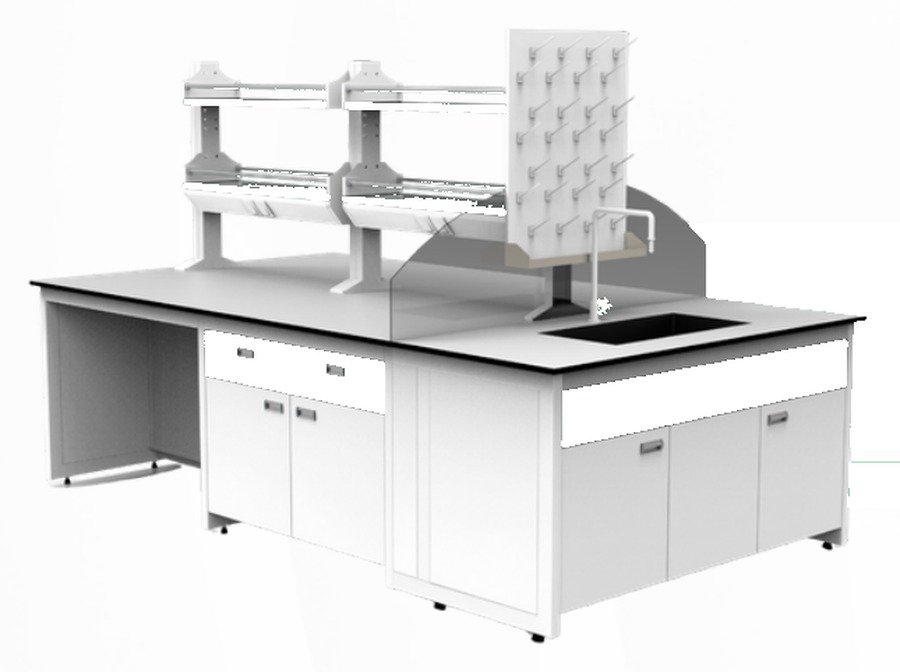
Stainless Steel
Stainless steel is non-porous, easy to disinfect, and handles heat very well. It is the standard where hygiene and contamination control matter most, and it works well in seamless designs. Its weakness is chlorides and certain acids: hydrochloric acid and chloride-based cleaners can cause pitting and corrosion. Grade 316, which contains molybdenum, resists chlorides better than grade 304, so match the grade to the chemicals. It also scratches easily and can be costly. Best for: microbiology labs, pharmaceutical and food QC labs, cleanrooms, and clinical or biomedical labs.
Polypropylene
Polypropylene is a thermoplastic with excellent resistance to many aggressive acids and bases. It contains no metal, making it a good fit for trace metal analysis. Its clear limit is heat: it softens at temperatures other materials handle easily, so it is not suited to open flames, hot plates, or hot glassware. It also scratches more easily. Best for: acid digestion areas, trace metal analysis labs, and wet process areas with heavy acid use.
Comparison Table
| Factor | Epoxy Resin | Phenolic Resin | Stainless Steel | Polypropylene |
|---|---|---|---|---|
| Chemical resistance | Excellent, broad range | Good to very good; weaker against strong oxidizing acids | Good; vulnerable to chlorides | Excellent against most acids and bases |
| Heat resistance | Very good | Good | Excellent | Low |
| Moisture resistance | Excellent | Excellent | Excellent | Excellent |
| Ease of disinfection | Very good | Very good | Excellent | Good |
| Scratch resistance | Good (minor scratches can be buffed out) | Good | Fair (scratches easily) | Fair |
| Weight | Heavy | Light | Medium | Light |
| Relative cost | High | Medium | Medium to high | Medium to high |
Matching the Material to Your Lab
Chemistry labs: epoxy resin is usually the safest choice; for heavy acid work such as digestion, consider polypropylene for that zone only. Microbiology labs: stainless steel is most common, while phenolic and epoxy are also non-porous and work well when budget or chemical use is a factor. School and university teaching labs: phenolic resin offers a strong balance of durability, moisture resistance, and cost; for chemistry teaching with heat and stronger reagents, epoxy is worth the extra cost. See teaching lab vs research lab.
Industrial QC labs: food, beverage, and pharmaceutical QC use stainless steel; chemical, petrochemical, and mining QC use epoxy resin; metal and trace element analysis uses polypropylene. Many labs don’t need one material everywhere. Epoxy for main benches, polypropylene in the acid area, and stainless steel near sinks or sterile zones often gives better performance and value.
Questions to Ask Before You Decide
- Which chemicals will be used most often, and in what concentrations?
- Will hot plates, burners, or hot glassware be placed directly on the surface?
- How often will surfaces be disinfected, and with what agents?
- How many workstations are needed, and how does that affect total cost?
- Does the lab need to meet specific hygiene, accreditation, or contamination requirements?
Clear answers narrow the choice quickly and strengthen your technical specification, especially if the purchase goes through a tender. For layout decisions, read island bench vs wall bench. For general safety guidance, see the OSHA laboratory resources.
Need Help Choosing?
There is no single best worktop material, only the best fit for how your lab works. Nadiso has designed and built laboratory furniture for government, education, and industrial clients since 1997. Contact Nadiso for a free consultation to plan worktops that will last as long as the rest of your lab.
Read also: Island Bench vs Wall Bench · Retrofit vs New Build