
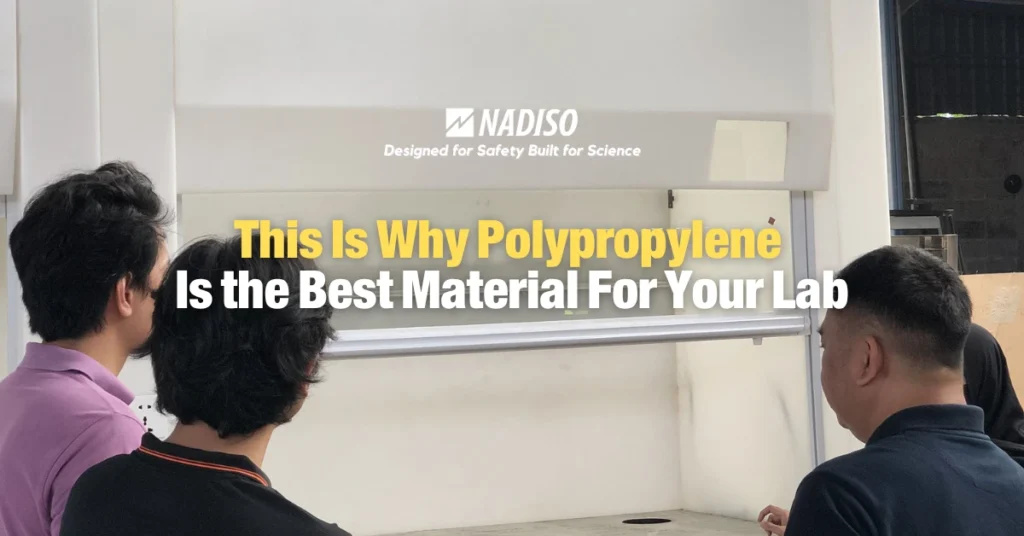
A well-designed laboratory requires materials that can withstand daily use, environmental challenges, and safety demands. In many cases, a modern laboratory operates in conditions where moisture, chemical exposure, and frequent cleaning are unavoidable. This makes material selection a critical part of any lab environment.
There’s one material that’s have a high moisture which is polypropylene. Polypropylene known for the durability and resistance from water and chemicals and it became a preferred choice in laboratories, especially when it comes to hygiene and safety.
Understanding why polypropylene performs well in a demanding lab environment can help schools and institutions build a safer and more efficient laboratory.
To see our Polypropylene product: Polypropylene Fume Hood
5 Reasons Why Polypropylene Is the Best Choice
1. Excellent Moisture Resistance
One of the biggest advantages of polypropylene is its ability to resist water absorption. Unlike wood or certain composites, polypropylene does not swell, warp, or weaken when exposed to moisture.
This makes it ideal for every laboratorium where spills and cleaning are part of daily activities.
2. Strong Chemical Resistance
A laboratory often deals with acids, bases, and various chemicals. Polypropylene offers excellent resistance to many corrosive substances, making it suitable for demanding lab environments.
This feature helps maintain both safety and durability, especially in laboratories that handle chemical experiments regularly.
3. Hygienic and Easy to Clean
Maintaining cleanliness is essential in every laboratory. Polypropylene has a non-porous surface, which prevents bacteria, mold, and contaminants from penetrating the material.
This makes it easier to clean and maintain, supporting a more hygienic lab environment.
4. Corrosion-Free and Long-Lasting
Unlike metal materials that may rust over time, polypropylene is completely corrosion-resistant. This property makes it highly reliable for long-term use in humid laboratory conditions.
For institutions looking to invest in durable lab furniture, polypropylene provides excellent long-term value.
5. Lightweight and Flexible Design
Despite its strength, polypropylene is lightweight and easy to shape. This allows for flexible lab design solutions that can adapt to different layouts and requirements.
In a school lab, this flexibility supports better space utilization and easier installation.
Building a Reliable Lab Environment
Choosing the right material is essential for creating a safe and efficient lab environment. Polypropylene offers a balance of durability, hygiene, and resistance that supports both safety and productivity.
Investing in high-quality materials like polypropylene helps ensure:
- Longer furniture lifespan
- Reduced maintenance costs
- Improved safety for students and staff
A well-equipped laboratory built with the right materials creates a strong foundation for learning and innovation.
High-moisture environments require materials that can handle constant exposure to water, chemicals, and cleaning processes. Polypropylene stands out as an ideal solution for modern laboratory needs.
By selecting the right materials, laboratories can improve performance, safety, and long-term efficiency.