
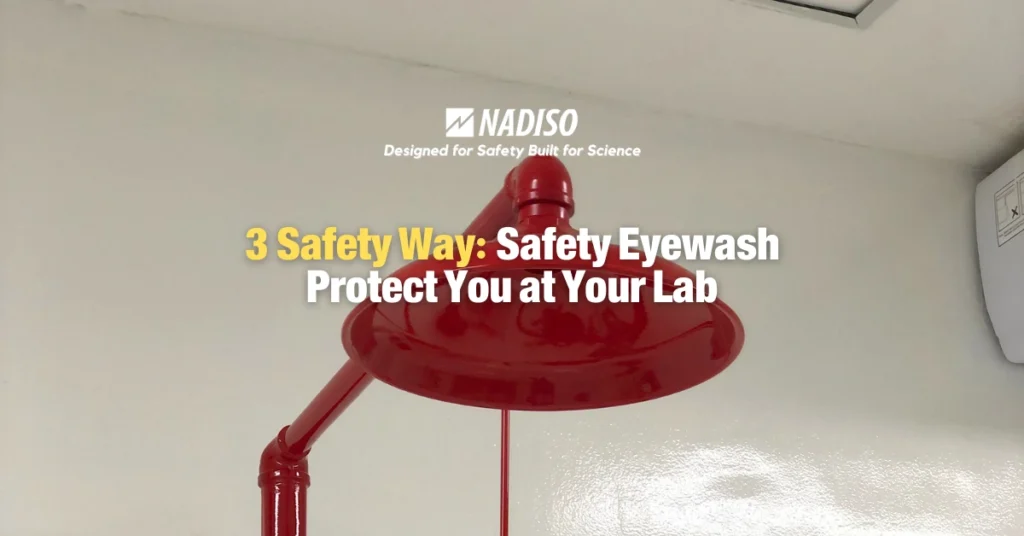
Accidents might happen in labs such as spills, hazards, and splashes. Splashes from corrosive chemicals, dust particles, or irritating liquids can enter the eye in a split second and without immediate action. What starts as a minor exposure can quickly become a serious injury.
Most labs are focusing on personal protective equipment like googles and face shields, but what happens after a splash? In reality, eye injury impacts are significantly lower in labs with easily accessible and well-maintained safety eyewash stations. Additionally, employees in these labs seem more comfortable handling dangerous compounds because they know that assistance is always available.
OSHA 29 CFR 1910.151(c)
Regarding the use of safety eyewash based on the regulation from OSHA 29 CFR 1910.151 (c) stated that “A workplace that may have potentially eyes being exposed to injurious materials, should provide suitable emergency eyewash and shower equipment. The standard of the eyewash should deliver at least 15 minutes by continuous flushing to decontaminate the eyes. In another hand eyewash should be accessible within a short distance around 10 seconds walking distance from the workplace (Skinner, et.al 1983).
These experts show us that eyewash stations aren’t just recommended, but they are a core part of lab safety infrastructure.
How an Eyewash Protects Lab Staff?
A safety eyewash station provides immediate flushing of the eyes — critical because the faster contaminants are removed, the less severe the potential damage:
- Flushes harmful chemicals: Even protective goggles can fail, and eyewash immediately dilutes or removes irritants.
- Reduces injury severity: Prompt rinsing for at least 15 minutes helps prevent chemical burns or permanent damage.
- Ensures compliance: Following standards helps labs meet legal/insurance requirements and protects institutions from liability.
Eyewash stations are usually integrated with safety showers in labs, both are used to flushing when needed. Their strategic placement near chemical benches or sinks ensures users can find and access them in seconds, not minutes.
In conclusion, safety eyewash stations are required in every laboratory where hazardous compounds are present. They respond quickly to eye exposure accidents, assist meet safety regulations, and protect employees from possibly irreversible eye injuries. By having eyewash stations accessible, maintained, and visible to all lab users, you improve the overall safety and preparedness of your laboratory environment.
Source:
Skinner, E. L., Watterson, C. A., & Chemerys, J. C. (1983). Laboratory safety handbook (No. 83-131). US Geological Survey
Shower. (2026). Shower and Eyewash Stations. Environment, Health & Safety. https://ehs.wisc.edu/campus-health-safety/emergency-preparedness/shower-and-eyewash-stations/