
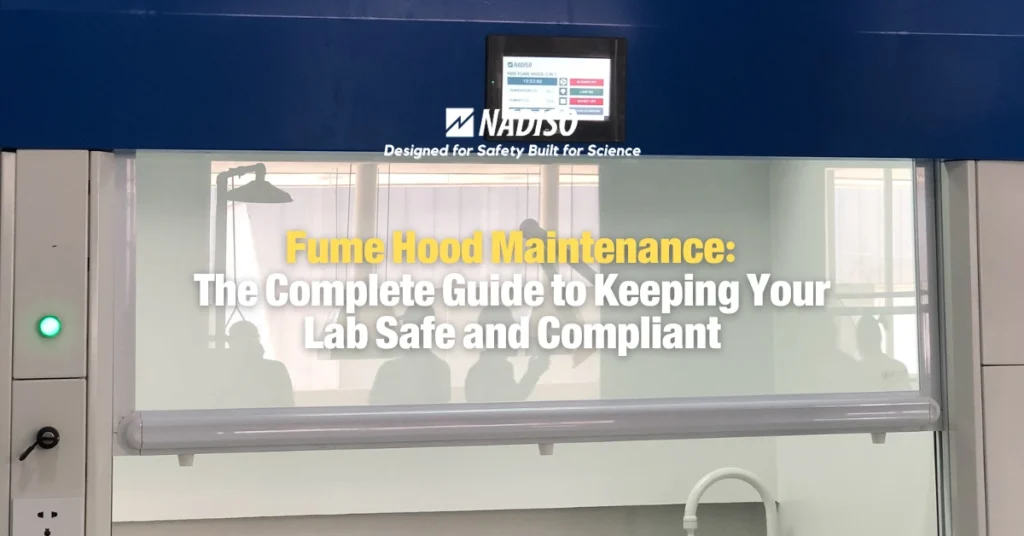
As someone who regularly works at a lab, we all know what Fume Hood is and how to operate it. But the question is do they know how to keep their Fume Hood is work smoothly and maintenance?
Fume hood maintenance is not just about keeping the equipment clean. It’s about ensuring the entire ventilation system functions correctly, protecting laboratory personnel from exposure to harmful substances, and meeting regulatory compliance standards set by organizations like OSHA, ASHRAE, and the National Fire Protection Association (NFPA).
In this article we are going to discuss how we can keep our lab safe and complaint by maintaining our Fume Hood in the long run.
The Importance of Doing Maintenance
When a fume hood is not properly maintained, airflow can become compromised, exposing laboratory workers to dangerous chemical vapors without any visible warning. This creates serious health risks — including respiratory illness, chemical burns, and in severe cases, long-term organ damage.
The key reasons why fume hood maintenance matters:
- Safety: Ensures the fume hood provides adequate containment and protection at all times.
- Compliance: Regulatory bodies such as OSHA (29 CFR 1910.1450) and ANSI/ASHRAE Standard 110 require regular testing and maintenance of laboratory ventilation equipment.
- Equipment longevity: Routine maintenance extends the operational life of your fume hood and reduces costly repairs.
- Energy efficiency: A well-maintained fume hood operates more efficiently, reducing unnecessary energy consumption — important for labs managing operational costs.
- Liability protection: Documented maintenance records protect institutions from legal liability in the event of an incident.
How can we do the maintenance
To do the maintenance there are 3 ways, which are daily, monthly, and annual. In this case, Inspections are necessary for effective fume hood maintenance, and every stage focuses on various parts and guarantees the hood operates at peak efficiency for the duration of its life.
Daily Fume Hood Checks:
- Verify the sash is at the correct working height
- Check the airflow indicator to show a reading within the acceptable range.
- Inspect the hood interior for chemical spills, debris, or some object that blocking airflow
- Make sure there’s no equipment or materials are there within 6 inches from opening the sash
- Check the UV lamp and light, if it’s functioning or not.
- Look for any visible damage to the sash, sash channels, or hood liner.
Monthly Fume Hood Checks:
- Clean the interior surfaces with a specific solvents or cleaning agents that compatible with the material
- Check that the exhaust blower is operating at the correct speed
- Inspect sash operation — ensure it slides smoothly and the counterbalance system works correctly
- Review the airflow monitor logs for any anomalies or drop in face velocity readings.
- For ductless hoods: inspect filter condition and replace if saturation indicators are triggered.
Annual Fume Hood Checks:
In the annual check, many checks to do and also require a certified industrial hygienist or a specialist on the ventilation to conduct a comprehensive performance test. These are the test what we can do:
- Face velocity test: Measures the air velocity at the sash opening using an anemometer.
- Tracer gas containment test (ASHRAE 110 AM method): Verifies the hood’s actual containment effectiveness using a controlled release of sulfur hexafluoride (SF₆) or other tracer gases.
- Exhaust system inspection: HVAC connections, ductwork, and the exhaust blower are inspected for leaks, corrosion, or mechanical wear.
- Alarm system testing: The low-flow alarm is triggered and verified to ensure it sounds at the correct threshold.
- Documentation and certification: All findings are documented in a maintenance log, and a certification label is applied to the hood indicating the next required test date.
Fume Hood maintenance is one of the most worth to invest at your laboratory, not only for safety purposes but for a wellbeing of its worker. A well-maintained fume hood supports regulatory compliance, offers dependable protection against dangerous exposures, and fosters a culture of safety that keeps everyone safe in the lab.
Whether you need to make or renovate a new lab, we are here to help you to achieve that. Contact our team of laboratory equipment specialists today for a consultation tailored to your facility’s needs.