
One of the most essential components of safety equipment in any lab is a fume hood. A fume hood creates a regulated airflow barrier between the researcher and the materials they are working with, protecting them from dangerous vapors, toxic fumes, and airborne chemical pollutants. However, in both academic and industrial contexts, the fume hood is one of the most frequently misused and poorly maintained pieces of lab equipment, despite its vital purpose.
The process of routinely checking, testing, and maintaining a fume hood to make sure it keeps functioning at the degree of protection it was intended to offer is known as fume hood maintenance. Even a high-quality fume hood might silently fail when maintenance is neglected, giving the impression of safety while failing to adequately contain hazardous materials.
Why Fume Hood Problems Are a Serious Safety Concern
With every act we do while using Fume Hood, many serious risk that we can address which is:
- Acute chemical exposure: Researchers working in front of a compromised fume hood may inhale toxic vapors, solvents, or reactive gas without realizing the hood is not functioning correctly.
- Chronic health effects: Repeated low-level exposure to chemical vapors over time — even below immediately dangerous levels — can cause long-term respiratory damage, neurological effects, and organ toxicity.
- Fire and explosion risk: In laboratories working with flammable solvents or reactive compounds, a fume hood that fails to contain vapors can allow flammable concentrations to build up outside the hood.
- Regulatory non-compliance: Facilities that fail to maintain fume hoods may fail inspections by OSHA, institutional environmental health and safety (EHS) offices, or accreditation bodies.
- Contamination of research results: In sensitive analytical work, an improperly functioning fume hood can allow air currents to introduce contaminants into experiments, compromising data integrity.
To read another complete guide for maintenance your fume hood you can read through this “The Complete Guide to Maintenance your Fume Hood”
Common Fume Hood Problem and How to Address Them
- Damages or Malfunctioning Sash
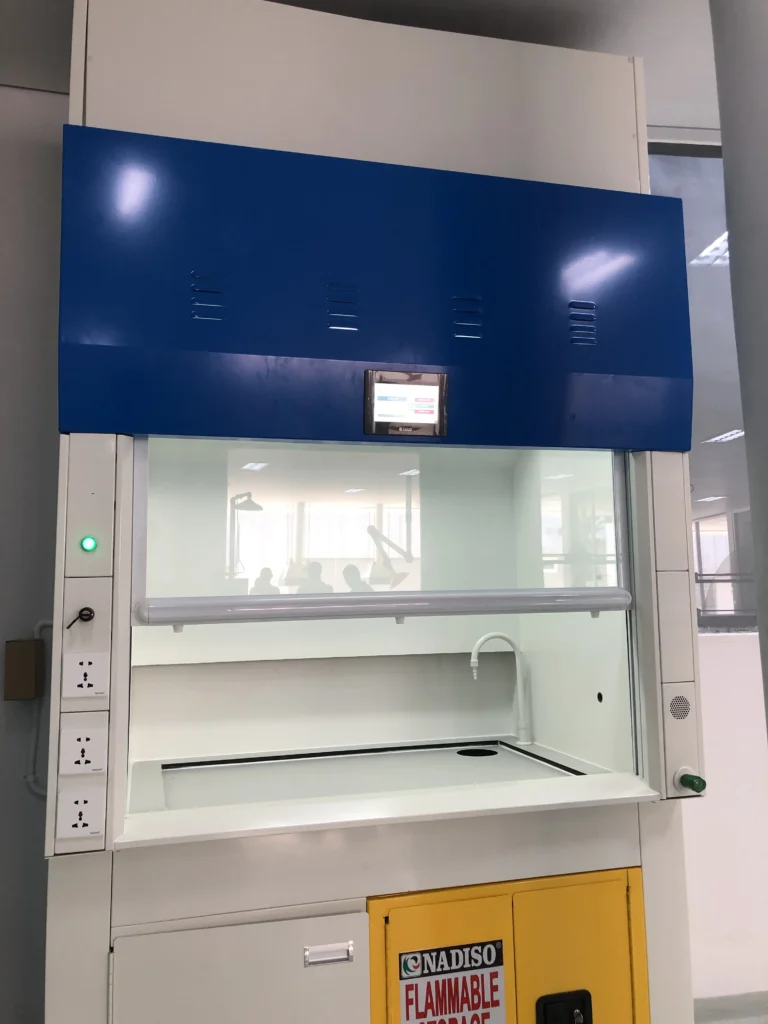
Sash is the movable glass or polycarbonate panel at the front door that you can move up and down. This use is for the primary physical barrier between the researcher and the hood of interior. A damaged, misaligned, or improperly used sash is a significant safety hazard and a common finding in fume hood maintenance inspections.
Common Problem:
Cracked or shattered sash glass or polycarbonate; broken or jammed sash counterbalance mechanism; sash left open above the safe working height; sash channels worn or obstructed causing the sash to stick or fall.
How to Address it:
Cracked sash panels must be replaced immediately, do not use the fume hood with a compromised sash. Contact your fume hood supplier or a certified service technician for sash replacement.
- Chemical spills that effect to the hood
One of the most common maintenance problems that laboratory staff members report is chemical spills inside the fume hood. Chemical spills may damage the hood liner, produce long-lasting vapor sources that worsen air quality, react with additional chemicals added in later experiments, and risk the hood’s structural integrity if they are not cleaned up.
What causes it:
Accidental tip-over of containers inside the hood; overfilling vessels during heated reactions; inadequate use of secondary containment; storage of incompatible chemicals inside the hood.
How to Address it:
Use the right type of PPE and chemical-specific neutralizers or absorbents to clean up spills inside the fume hood right away. Check the hood liner for etching, discoloration, or rust after cleaning. Professional resurfacing or liner replacement may be necessary in cases of severe liner damage. When dealing with liquids, always utilize secondary containment trays inside the hood to minimize spills in the future. Additionally, do not store chemicals inside the hood in between usage.
- Chemical spills that effect to the hood
The adjustable panels at the back of the fume hood’s interior that guide airflow through the hood and into the exhaust chamber are called baffles. Despite being a major contributor to decreased face velocity and turbulent containment failures, dirty or improperly positioned baffles are often disregarded because they are not readily apparent during ordinary use.
What causes it:
Chemical residue, dust, or particulates accumulating on baffle surfaces over time; accidental displacement of baffles during equipment movement inside the hood; incorrect baffle adjustment by untrained users attempting to ‘improve’ airflow.
How to Address it:
Use a soft cloth and a compatible cleaning agent to remove residue from baffle surfaces. Verify that baffles are positioned correctly according to the hood of manufacturer’s specifications after cleaning. Mark baffle positions with a reference marker to help identify if baffles have been inadvertently moved
- Poor Users Practice that Effect Fume Hood Performance
Poor user practices—behaviors that unintentionally endanger the hood’s intended airflow even when the hood itself is mechanically sound—are responsible for a sizable percentage of containment failures reported in laboratory safety investigations.
The most common user-related fume hood problems include:
- The efficiency of the hood containment is diminished when the sash is raised over the designated safe working height.
- Using the fume hood as a cabinet for storing chemicals, which obstructs internal ventilation channels and raises the possibility of spills.
- Creating turbulence at the sash opening by quickly reaching in and out of the hood during aggressive reactions.
How to Address it:
Implement a laboratory safety training program for all fume hood users, including the existing staff annually. Post clear visuals reminders of correct fume hood use.
Maintaining fume hoods is not an administrative problem. It is a direct investment in every worker’s productivity, well-being, and safety in your lab. When a fume hood is kept up properly, researchers may confidently focus on their work knowing that the protective equipment is operating as it should.
Don’t wait for something to go wrong before acting. Assess current fume hood maintenance routine, look for any gaps, and put this guide’s recommendations into effect. Get in touch with a competent fume hood service specialist right away if your fume hoods are past due for annual certification or if you’re not sure if they’re operating at the necessary level.