
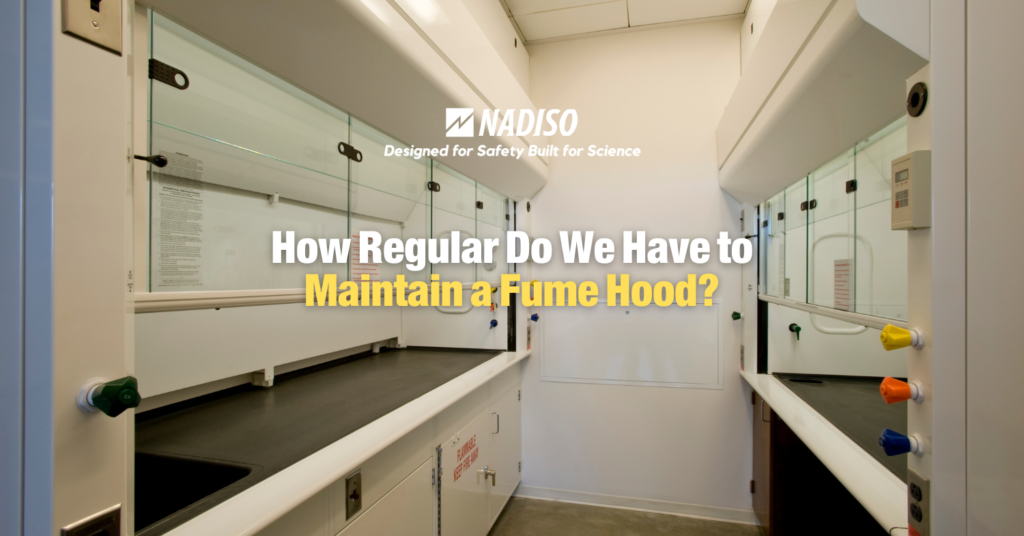
Learn how often fume hood maintenance should be performed to ensure laboratory safety, optimal performance, and compliance with industry standards.
Fume hood is the most critical equipment in the lab because of its safety. However, even the most advanced fume hood cannot provide adequate protection without proper maintenance. As someone who works in the lab, fume hood routine checks need to address for ensuring the airflow, maintaining user safety, extending equipment lifespan, and complying with laboratory regulations.
So, how often should a fume hood be maintained? Understanding the recommended maintenance schedule can help laboratories operate safely while maximizing the performance of their equipment.
Why Fume Hood Maintenance Is Often Overlooked
Many laboratories invest heavily in high-quality fume hoods, yet preventive maintenance is sometimes neglected until a problem arises. Reduced airflow, faulty alarms, damaged sashes, and clogged exhaust systems are frequent problems that develop gradually and may go undiscovered until safety is compromised.
In laboratories handling hazardous chemicals daily, poor maintenance can lead to:
- Reduced containment efficiency
- Increased chemical exposure risks
- Higher energy consumption
- Unexpected equipment downtime
- Costly repairs or replacement
A proactive maintenance program helps laboratories identify these issues early, reducing risks while improving long-term operational efficiency.
Based on Occupational Safety and Health Administration (OSHA) recommend regular inspection and proper maintenance of laboratory ventilation equipment to ensure the safety. The National Research Council also stated that Prudent Practices in the Laboratory for preventive maintenance are essential for ensuring laboratory ventilation systems.
So how can we do the maintenance schedule for the Fume Hood?
In this maintenance, we separate into 4 terms which are daily, monthly, every six months, and annually. Although maintenance requirements might vary based on laboratory activity, worldwide safety groups urge taking a proactive approach rather than waiting for equipment breakdown.
Daily:
Before operating a fume hood, laboratory personnel should perform a short inspection to ensure that the equipment is correctly functioning.
Daily checks include:
- Confirming the airflow monitor is running normally.
- Checking if the sash glides smoothly
- Ensure air vents are not clogged.
- Remove unneeded materials from the work area.
These simple inspections aid in detecting evident problems before they become severe safety hazards.
Monthly:
Routine cleaning is an important part of Fume Hood Maintenance. Regarding that laboratory staff should do these things:
- Clean interior work surfaces
- Remove chemical residue
- Inspect lighting and electrical components
- Check airflow alarms and indicators
Keeping the fume hood clean helps maintain proper airflow while reducing contamination inside the workspace.
Every six months:
The effectiveness of a fume hood depends on maintaining proper face velocity. Semi-annual testing should include:
- Measuring face velocity
- Inspecting ductwork connections
- Evaluating airflow balance
- Identifying ventilation obstructions
Regular airflow verification ensures hazardous vapors continue to be captured efficiently.
Annually:
Industry regulations dictate that every fume hood be professionally inspected at least once a year. The annual maintenance should include:
- Air flow calibration
- Mechanical inspection.
- Electrical system evaluation
- Exhaust system inspection
- Performance testing
- Safety certification
Professional certification shows that the fume hood continues to operate in accordance with accepted laboratory safety standards.
A successful maintenance program extends beyond periodic inspections. Labs should also:
- Train lab staff on how to utilize the fume hood correctly.
- Avoid keeping chemicals permanently within the hood.
- Maintain the sash at the recommended working height.
- Document each maintenance action.
- Schedule an annual certification with qualified technicians.
Maintaining accurate service records not only helps with regulatory compliance, but it also aids in the detection of reoccurring issues before they disrupt laboratory operations.
We all know daily, monthly, and even annually inspections are important due to the laboratory environment safety that they work in. We understand that a well-designed laboratory does not end with Installation. Nadiso view this thing as a reliable laboratory performance that depends on proper maintenance planning and long-term equipment care.
Our team can help you select and integrate the right fume hood solutions that meet international safety standards and support long-term operational efficiency. Contact Us if you want to know more about Fume Hood by click on this link.