
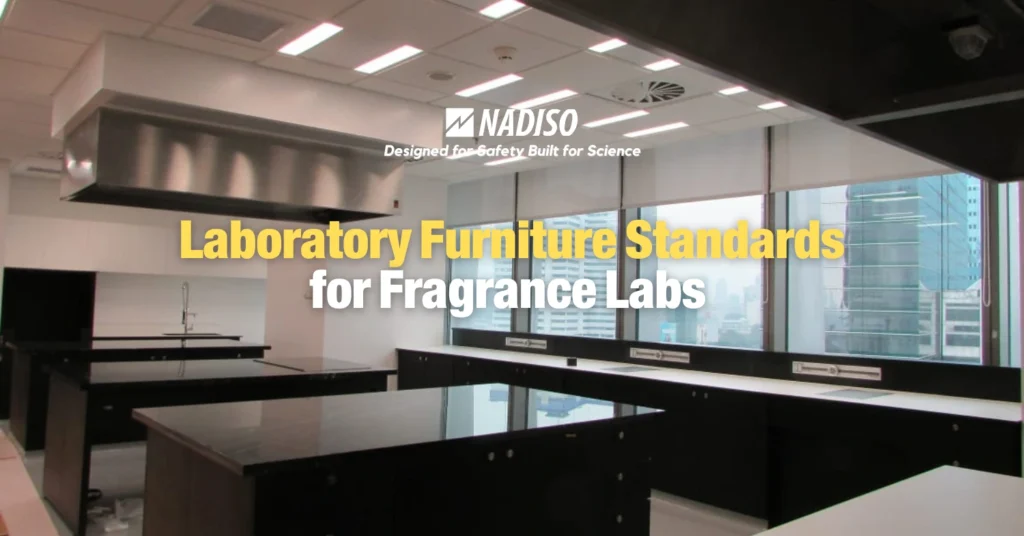
Fragrance labs are a highly specialized laboratory where cleanliness of environmental control is a matter for developing and testing the perfume and aroma compounds. Different from a regular lab, fragrance lab requires carefully selected laboratory furniture that support safety.
Due to sensitive contamination from the testing, every element from fragrance labs such as airflow and material quality must be designed to minimize interference. Poorly selected laboratory furniture can absorb odors, degrade over time, or even affect the outcome of fragrance analysis.
Understanding the right laboratory furniture standards is essential to building a Fragrance lab that is safe, efficient, and reliable for long-term use.
Fragrance design:
From the complex and rigid needs of the work in the lab, fragrance lab has unique challenges compared to a typical lab. Fragrance and perfume development involve volatile compounds that easily spread in the air that leads contamination.
That’s why based on the international standards a fragrance laboratory it should use a proper materials and design based on Occupational Safety and Health Administration (OSHA), World Health Organization (WHO), and ISO (ISO/IEC 17025) highlight the need for durable, chemical-resistant, and hygienic laboratory furniture. The standards are:
- Safe handling of chemical substances
- Controlled laboratory environments
- Reliable and repeatable testing results
Fragrance laboratories are strict due to safety because of the rigid operation procedure. To support the safety work, we should know that the furniture has its standards that are:
Easy-to-Clean and Hygienic Design:
In any fragrance lab, cleanliness is essential. To avoid accumulation of dirt, residue, or scent, furniture should be made with smooth surfaces and few seams.
Sanitary lab equipment aids in maintaining:
1. Precise testing circumstances
2. Secure workplaces
3. Reliable results in the lab
Chemical-Resistant Surfaces:
Chemicals, solvents, and essential oils are used in the creation of fragrances. As a result, lab equipment in a fragrance lab needs to be able to resist chemical and corrosion damage.
- Surfaces resistant to chemicals:
- Sustain durability over time
- Prevent deterioration of the surface
- Encourage the safe handling of scent components
Non-Porous and Odor-Resistant Materials:
Furniture for a fragrance lab must be built of non-porous materials that don’t absorb smells. Due to their resistance to chemical absorption, materials like stainless steel, polypropylene (Read our polypropylene product), and phenolic resin are frequently utilized. This guarantees that residual scents won’t affect the accuracy of perfume testing.
Ergonomic and Functional Design:
User comfort should be given top priority in a well-designed fragrance lab. Employees in laboratories frequently work long hours of blending, testing, and assessing perfumes. The following are examples of ergonomic lab furniture:
- Workbenches that are movable
- Sitting comfortably
- Well-organized designs for productive working
This lessens weariness and increases productivity.
The criteria for laboratory furniture must be carefully considered while designing a modern fragrance lab. Every element contributes to guaranteeing accuracy and safety, from ergonomic designs to odor-resistant materials.
In our recent work on a Fragrance lab, we focused on selecting odor-resistant and chemical-resistant laboratory furniture, optimizing airflow to prevent cross-contamination, and creating an ergonomic layout that supports both precision and daily workflow.
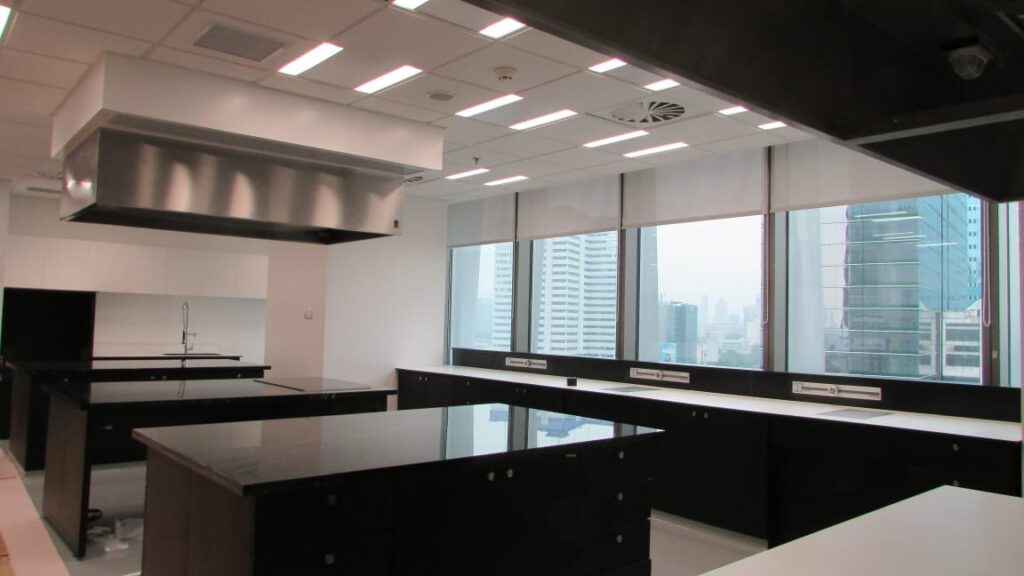
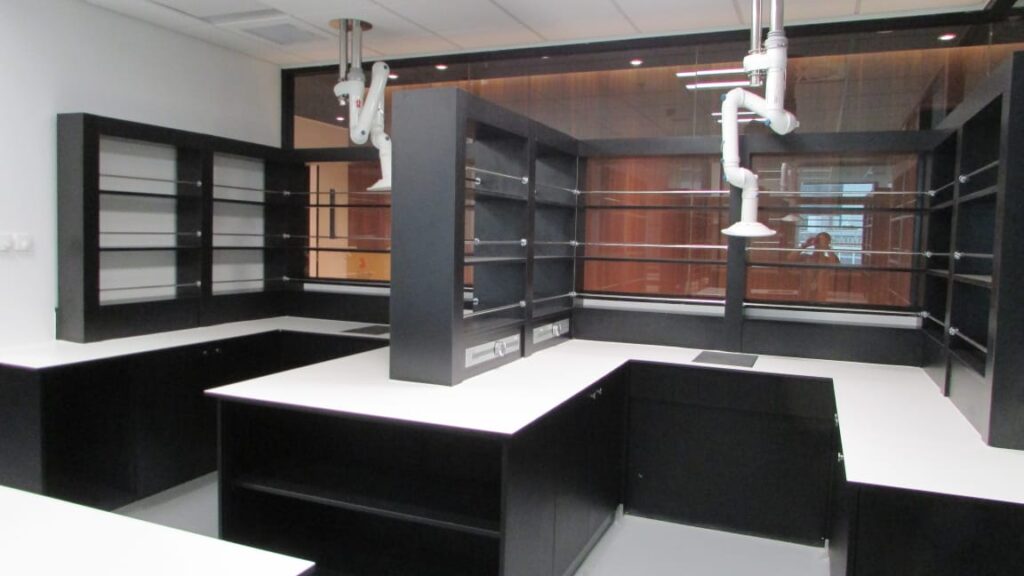
By following these guidelines, labs can establish settings that facilitate better perfume testing, enhance workflow effectiveness, and preserve long-term durability.
A well-designed Fragrance lab is not only a workspace; it is a foundation for innovation in fragrance science.